Showing posts with label Power. Show all posts

Monday, December 23, 2013

All in One (and nothing more or less)

"Guess who?"
"Blessed is the nation whose God is the Lord.... He spoke, and it was done. He commanded, and it stood fast. [...] The counsel of the Lord stands forever, and the thoughts of His heart to all generations. [...] He is our help and our shield. Our hearts shall rejoice in Him, because we have trusted His holy name." Ps. 33:8-21

There is that oft-quoted phrase from Narnia about how Aslan "isn't safe" but is "good." The idea comes from the terror of God in the light of His sovereignty: He wills what He wants and speaks what He wills and none can stop Him. That is power you cannot buy nor inherit or steal. It is absolute power, power belonging to Power Himself, and alone it is a terror. If the God that rules all is merely a Being of power, then we have cause to be uneasy.

If He has no wisdom to guide His power to its proper means and ends, then He is no more than a child playing with a weapon of mass destruction. If He has no love to influence His power for the good of others, then He is no more than a spoiled child playing with a weapon of mass destruction. If He has no justice to allot His power into proper amounts, then He is a reckless, spoiled child playing with a weapon of mass destruction. And if He has no goodness shaping His power towards benevolent ends, then He is no child at all but rather a demonic force supreme. Again, we would have cause to be uneasy.

Every facet finds its place.
Of course, the praise of the saints for God is directed towards His terrific power, but not it alone. We praise God for all that He is, and He is all that is good: power and wisdom and love and justice and goodness and all else that is right and proper, all united into a single, harmonious, active, personal Being called God. His power is as wise as it is terrible, and his wisdom as powerful as it is wise, and both as just as they are terrible and wise, and on and on and on, every layer intertwining until no twines remain and all is whole and one and inseparably God. He knows no isolation. His power cannot be isolated into a single action, devoid of everything else belonging to Him. Rather, it is always and forever buttressed by and buttressing every attribute that He is. For this, for His completeness and balance, for us having everything to fear and yet nothing to fear, we praise Him and rejoice in Him and call blessed all those who have Him as God. Amen.


-Jon Vowell (c) 2013


Tuesday, December 17, 2013

On Strength (Homily Magnus)

"Be thou exalted, Lord, in Thine own strength. So we will sing and praise Thy power." Ps. 21:13

The babe with the power!
The modern western world is obsessed with power. From our most intellectual blather to our most common jargon, we've got power on the brains. In literary circles, we're concerned with characters having "agency," the ability to make their own choices and choose their own destiny. In the world of pop psychology, we endlessly seek "empower- ment," an affirmation and enabling of our own self and desires. Popular culture regularly feeds into our need for self-actualization, and in the revolving-door insane asylum of social and political activism, power is the key agenda: who has it, how they're abusing it, and how we can acquire more for ourselves and others.

"Come at me, bro."
It feels cheap and easy to lay this particular mania at the feet of Nietzsche, but I cannot help it. He is too obvious a target, as he would prefer. No doubt he had his inspirations, and he has definitely inspired others who carried his ideas further and further, but if you observe all the assumptions of our postmodern society and reduce them back to their source, you get Nietzsche. He was the voice crying in the wilderness, the first step in a new direction. It is he who successfully reduced all of life to power, to dominance and submission, to masters and slaves, to supermen and sheep. It is he who declared (ironically) that all language is the myriad masks of power, and it is his postmodern disciples of the mid to late 20th century that stretched his ideas all the way into popular consciousness. Now there is no truth; there is only power, and all claims on truth are merely disguised plays at power. There is nothing left for us but the destruction of all the "truths" and then the mad scramble for power that pours out of them like candy from a sad, shattered pinata.

There can be only one.
It is no wonder that Nietzsche (and everyone poisoned by his epistemological children) hated Christianity. It is a great rebuke to his worldview of power, for not only will the meek inherit the earth, but also all-power already belongs to One. Forever and endlessly belongs to One. God has all the power, for He is all the power. He infinitely is it and has it and gives it to all without once diminishing His surplus. Before Him, the mad scramble for power and the mad cycle of dominance and submission end. There is only one Power, and it is God. Likewise, there is only one dominance, and that is His. And there is only one submission, and that is ours. The superman already exists, has always existed. He is God incomprehensible, the Father Almighty.

All of Him, all at once.
Yet it is not mere power that makes God incomprehensible, but rather all of His divine attributes at once. He brings all of Himself to bear on every action that He takes, and included in Himself is not only infinite power but also infinite love and justice and grace and wisdom and goodness. Perhaps the greatest rebuke to the Nietzschean ethic is God's irreducibility: His incomprehensible nature is not a complexion of parts but rather a single, harmonious whole with every attribute working in perfect interwoven tandem and solidarity. Thus, His all-power can only come prepackaged with His all-love and all-wisdom and all-goodness and everything else that He infinitely is.

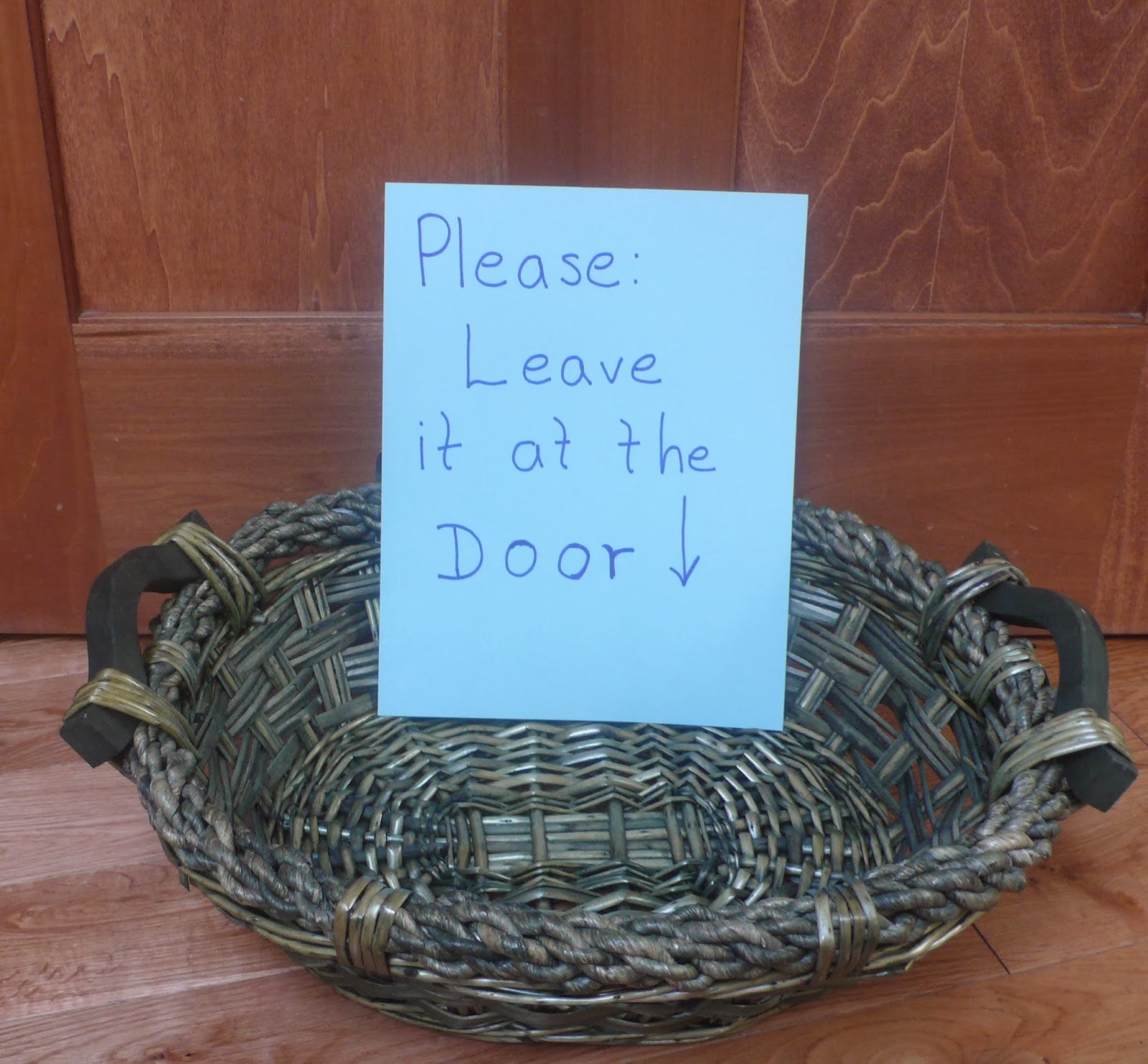
Think of it this way. We know what it means to leave a part of ourselves behind when we make a decision. We leave a part of ourselves "at the door," so to speak. There are times when we make a solely emotional decision (with our children or loved ones), where we leave logic and reason and other factors behind. On the other hand, we can with effort make solely logical decisions, blocking out emotional elements and trying to make a cold, rational choice. In either case, something is left out. This is not necessarily the best or worst way to make decisions, but it is a way we are familiar with, because it is true to who we are: we are not like God. We are not a harmonious whole of attributes; He is. He never leaves any of Himself "at the door." He brings all that He is into every action He makes, for He cannot be reduced to any one part of Himself. That is what is meant by His "irreducibility."

Portrait of the superman.
Every heresy and error of man can be traced to a reduction of God (or the ultimate "thing"). Every crazed philosopher or good natured guru has made the same mistake, though they make it in a myriad of ways. Reduce all to peace, and you create a rabid pacifism that would allow horrific injustices to occur just to keep its hands clean. Reduce all to power, and you unleash a world of merciless narcissism, cruelty, and brutality. God is a slap in the face to all our nonsense, the spitting in the eye of our reductionistic insanities. He will not be reduced to our minimalist understanding. He will not be confined by our finite categories. He will be Himself and nothing less. His peace will not rest until it has broken every peace-breaker, and His power wrought its most awesome work in a poor carpenter from Nazareth who would not revile when He was reviled, and whose humiliating submission to death crushed the power of death forever, for the weakness of God is still stronger than the strength of supermen.

-Jon Vowell (c) 2013


Wednesday, April 17, 2013

The Stained-Glass God (as told by an orthodox rebel)

"Thy Maker is thy husband.... [He] has called you as a woman forsaken and brokenhearted, as a wife wooed in her youth but later abandoned.... Behold, I have created the smith who blows the coals in the fire and brings forth a weapon for his work; I have created the devastator to destroy. [Therefore,] no weapon formed against you shall prosper...." Is. 54:5-6, 16-17

Our God is a God of sovereign-love: all-powerful, righteous zeal and passion for His beloved. He is the husband that husbands ought to be, the substance to the many shadows of many men.

We do not understand this, and in our attempts to grapple with who God really is we often give in to our terrible simplifications. For some, God is nothing else but sovereignty, nothing but all-power. This is the error of hyper-Calvinists (and many legalistic sects). God is nothing to them but power: He saves because He is in charge, and He damns because He is in charge. If we don't like it, then tough. Who are you, oh man, to question this God? You are an irrelevant wisp on the wind, and to Him you mean less than nothing. In truth, it is a reverential position to take, but it is also a loveless, lifeless affair. God is the cosmic administrative taskmaster, and we are no more than the cogs and pawns of His perfect system. It is the way of Allah and not of Jehovah.


For others, however, God is nothing but love, nothing but all-passion and all-affection. This is the error of religious liberals and progressive-types. God is nothing to them but raw emotion, a omnipotent sentimentalism that cares little for truth or clarity. All that matters to Him are our feelings and that He meets them all and hurts none. Thus, all "hard" doctrines must be rubbed out completely or be so blurred in revision that it is the same thing as being rubbed out completely. All so we can be assured that "love wins," even against itself. In truth, it is a sympathetic position to take, yet it is an enterprise doomed to failure. God's love means absolutely nothing except what He has said about it, and too often we confuse and conflate the "love of God" with our own shallow sense of tolerance. It is a house of cards that will never survive the thousand natural shocks of life.

God is not "Power or Passion". He is not "Truth or Love," "Doctrine or Compassion," "Holiness or Authenticity," or any other of our false dichotomies. He is both/and and not either/or: both power and passion, truth and love, doctrine and compassion, holiness and authenticity, the "Maker" and the "husband". He is all good things, without division or confusion. It is we who divide and confuse, because we are confused and divided---in ourselves and with each other. This should be no surprise. We are our own worst enemy, our own great and constant failure, which is why it is so paramount we move past ourselves, past everybody else, past all agendas and plans and man-made movements and draw close to the God of sovereign-love, whose simplicity answers all our insanities, whose infinite diversity fractures our rigid systems into a glorious stained-glass window, and whose all-encompassing absolutism consumes our discrepancies like the sea swallows the rain.


-Jon Vowell (c) 2013